qbz is a native, bit-perfect hi-fi player for Qobuz, built in Rust on top of Tauri. It started life as a Linux-only app. I brought it to macOS.
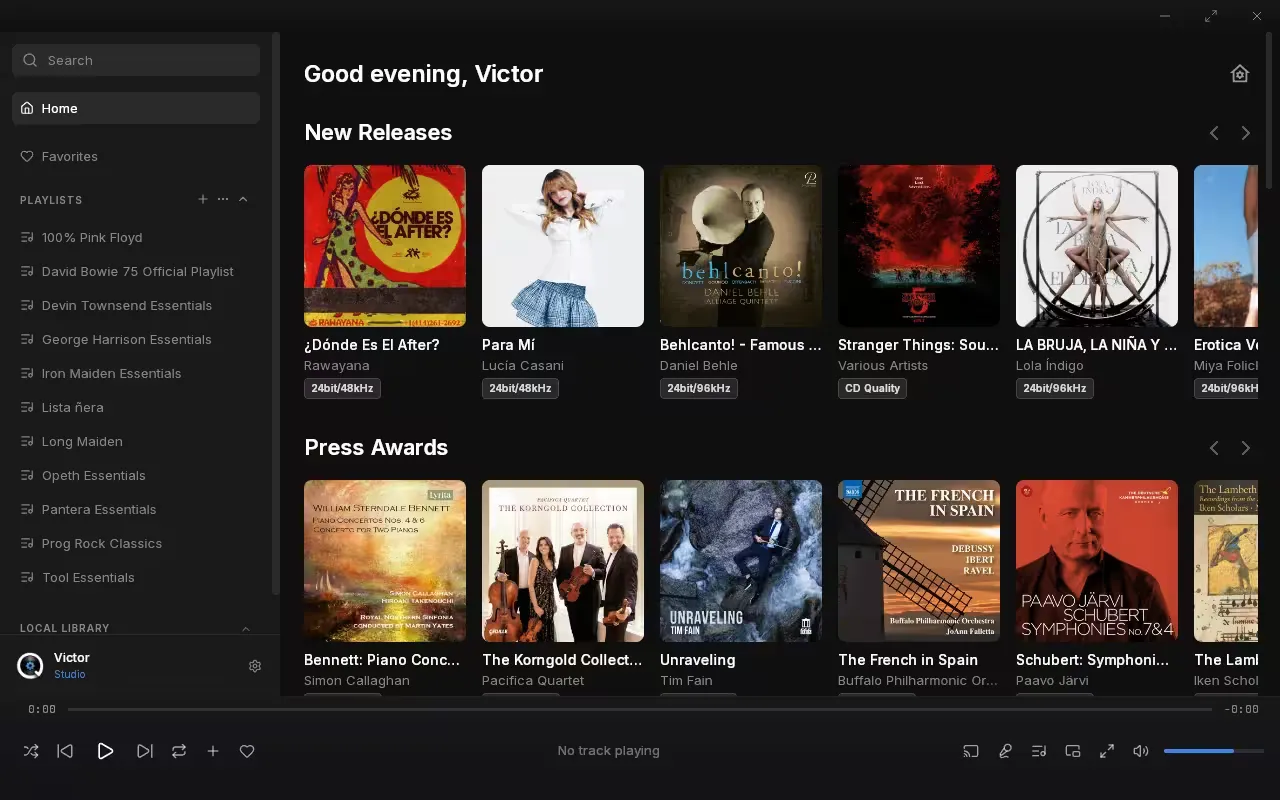
Most of the work was the kind you only notice when it is wrong. Real CoreAudio output with device probing and sample-rate switching, so playback stays bit-perfect end to end. Hunting down a track-change crackle that turned out to be a buffer handover bug. Deep links for qobuzapp://, native notifications with album artwork, x86_64 cross-compilation for Intel Macs, and ad-hoc signing so Gatekeeper stops rejecting the bundle. Each one is small on its own; together they are the difference between “compiles on macOS” and “feels native on macOS”.
Some of it pushed one layer down, into the crates qbz is built on. macOS sample-rate switching needed device-rate enumeration that coreaudio-rs did not expose, so I added it there. Album artwork in notifications needed notify-rust to accept an image path, so I added that too. For a while qbz ran on my forks of both; once the changes were released, it went back to the published crates.
Almost all of the app-level work landed upstream in vicrodh/qbz across a few dozen merged pull requests, starting with the initial macOS support PR. Working in someone else’s audio codebase, in Rust, on a platform it was never written for, was a good reminder of how much careful work sits underneath the word “port”.